
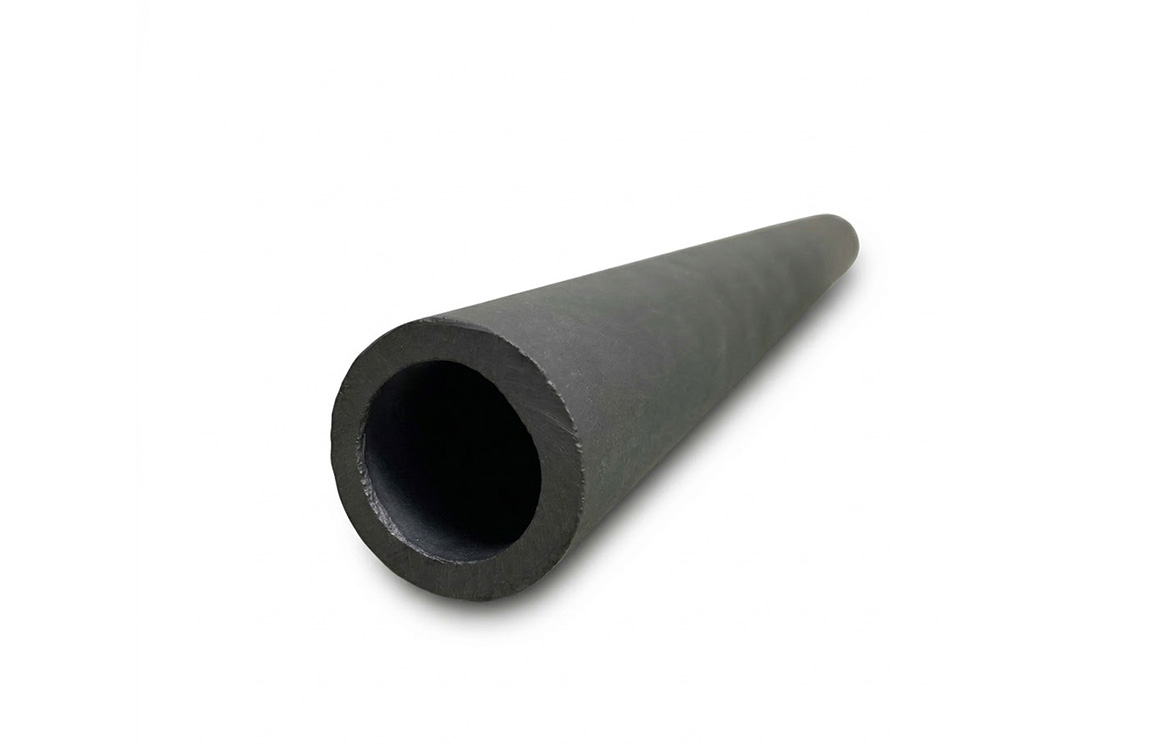
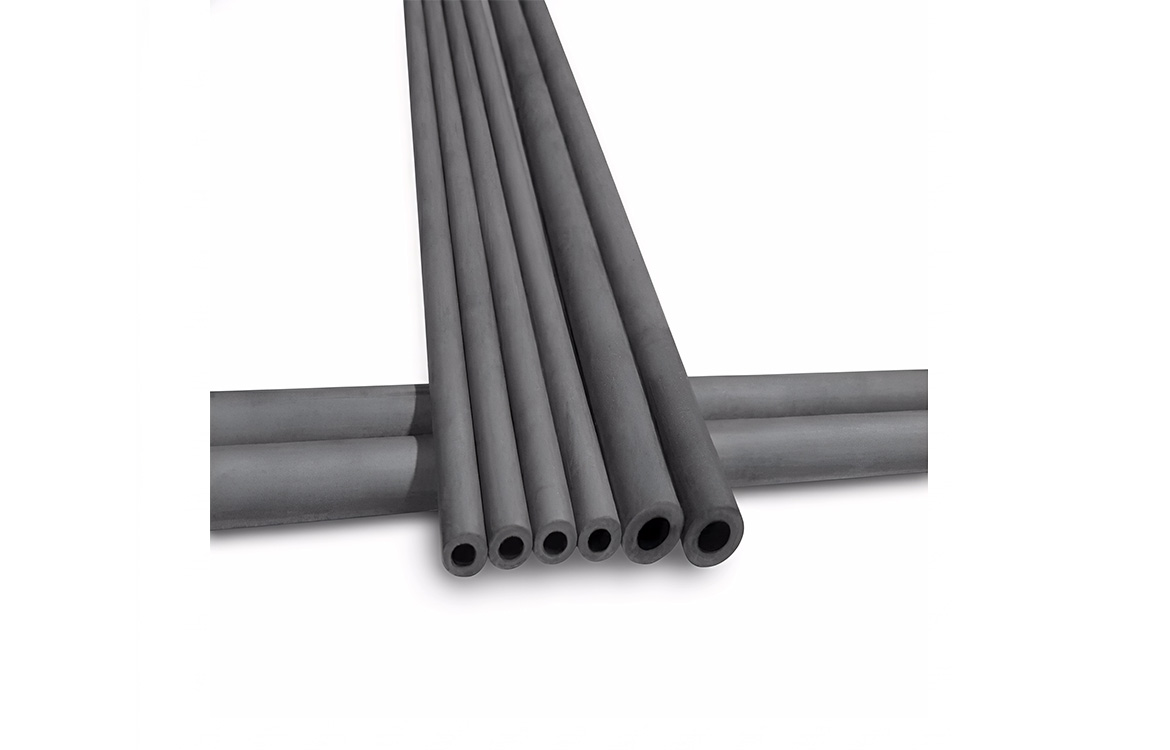
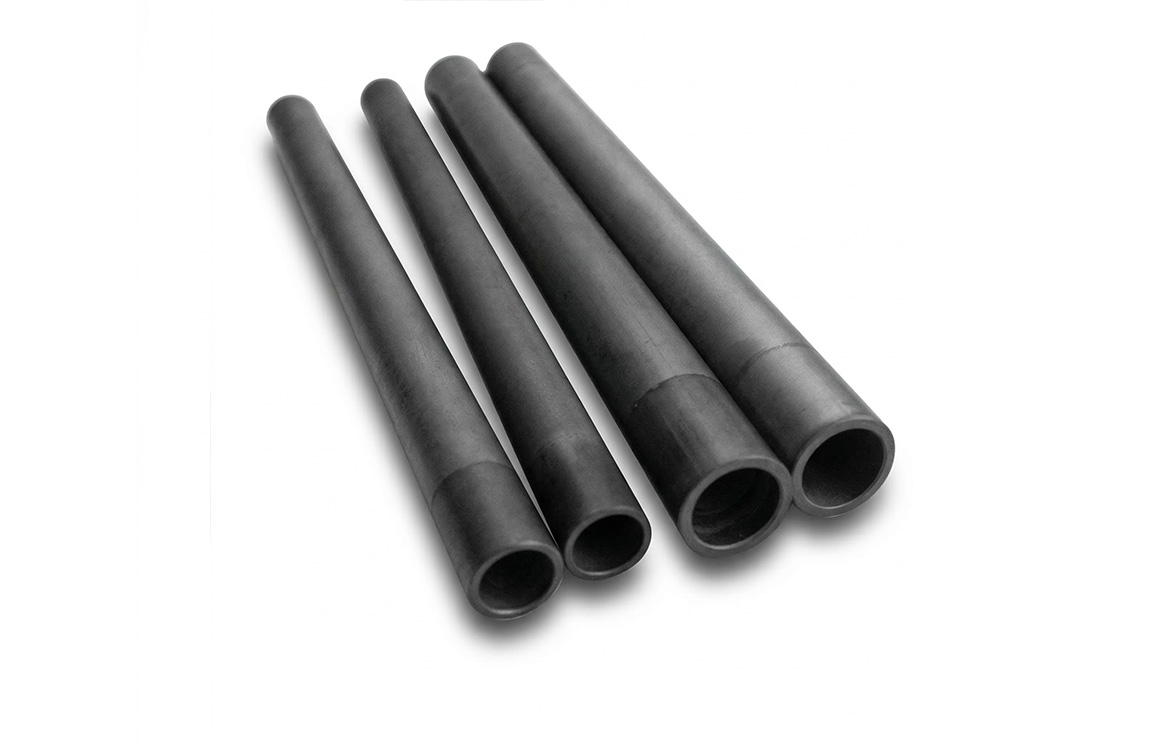
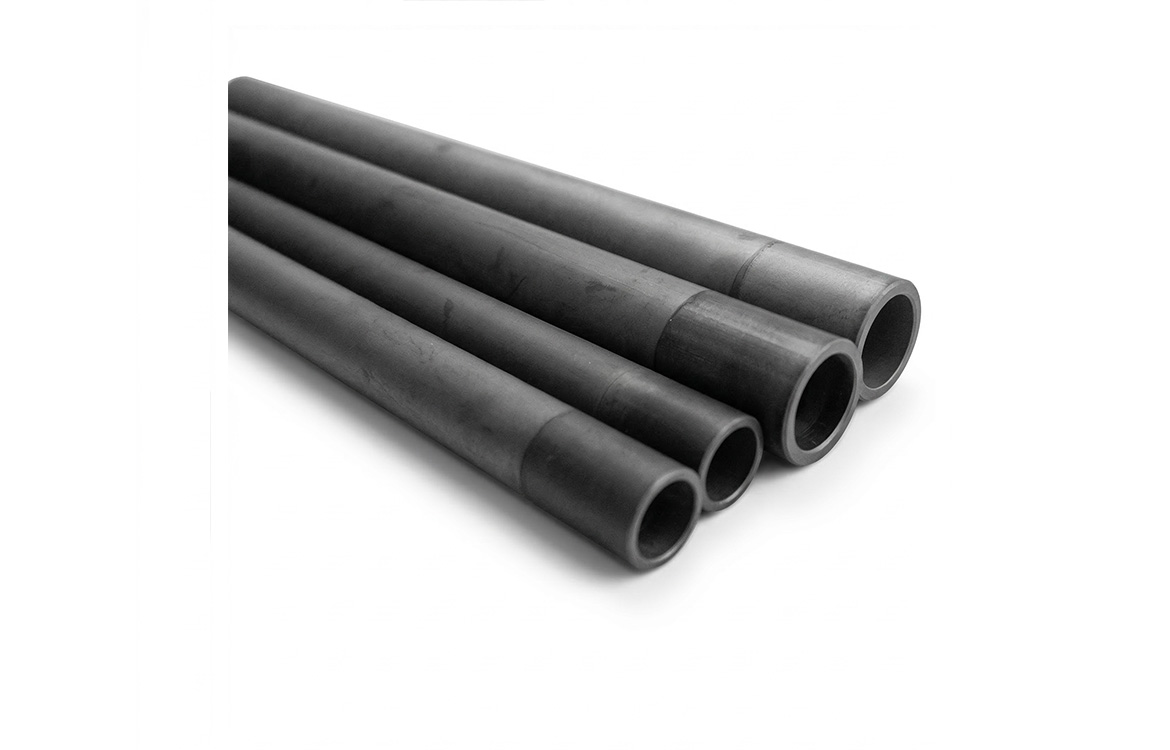
CSNG Composite Sleeve for GO Silicon Steel
Designed for demanding grain-oriented silicon steel annealing lines, this CSNG isostatic composite carbon sleeve delivers exceptional resistance to ammonia corrosion up to 950℃. Its ultra-dense structure (≤0.05 mm pores) and precisely controlled thermal expansion (3.0–3.5×10⁻⁶/K) solve the critical challenges of ammonia penetration and thermal shock—providing superior longevity and surface quality for HiB and CGO production where standard sleeves fail prematurely.
Add Your Heading Text Here
Micro-Pore Barrier Against Ammonia Penetration:Maximum pore size is strictly controlled to ≤0.05 mm—creating a physical barrier that prevents ammonia molecules from penetrating deep into the material matrix, dramatically slowing chemical corrosion and extending service life in aggressive GO annealing atmospheres.
Thermal Expansion Matching for Crack Prevention:Precisely engineered coefficients of thermal expansion (3.0 for LT, 3.5 for MT) ensure synchronous movement with metal roll cores during the complex thermal cycles of decarburization and nitriding—eliminating thermal shock cracking that causes unplanned downtime.
Ultra-Dense Structure for Maximum Chemical Resistance:Apparent porosity of ≤13–14% combined with bulk density of 1.75–1.78 g/cm³ creates the densest microstructure in our GO portfolio—minimizing pathways for ammonia attack while providing exceptional resistance to oxidation and wear.
Enhanced Strength for High-Tension GO Lines:Flexural strength of 18–22 MPa and compressive strength of 35–40 MPa deliver the mechanical robustness required for modern high-speed grain-oriented lines operating under elevated strip tension—ensuring dimensional stability throughout extended campaigns.
Superior Graphitization for Goss Texture Protection:Graphitization degree of 75–95% provides enhanced self-lubricating properties that minimize friction against the developing Goss texture—protecting the precise magnetic orientation critical to HiB steel performance while reducing surface defects.
Dual-Grade Optimization for Complete Furnace Coverage:LT version (CTE 3.0) for decarburization zones and MT version (CTE 3.5) explicitly rated for ammonia service provide seamlessly integrated performance across the entire GO annealing line—simplifying specification while ensuring each section receives optimal material properties.
Isostatic Homogeneity for Predictable Wear Patterns:CSNG isostatic pressing technology ensures uniform density and structure throughout the sleeve body, eliminating weak points that could concentrate ammonia attack—delivering consistent, predictable wear that simplifies maintenance scheduling.
Chemical Inertness Through C-Si-N Formulation:The proprietary C-Si-N material system provides inherent chemical resistance beyond physical density alone—actively resisting reaction with ammonia at the molecular level while maintaining mechanical integrity through thousands of operating hours.
Extended Campaigns for Premium GO Production:By combining physical barriers, chemical resistance, thermal matching, and mechanical strength into a single engineered solution, this flagship sleeve enables 12–18 month campaigns in HiB production—delivering the lowest total cost of ownership for premium grain-oriented steel manufacturers.
Application
HiB Grain-Oriented Steel Nitriding Section:In the critical nitriding zones of high-permeability (HiB) lines operating at 900–950℃ with concentrated ammonia atmospheres, this CSNG composite sleeve’s ≤0.05 mm micro-pores prevent ammonia penetration—ensuring the precise nitrogen pickup required for superior magnetic properties without sleeve degradation.
CGO Production Lines Targeting Extended Campaigns:For conventional grain-oriented producers seeking to maximize uptime in continuous operation, the matched thermal expansion (3.5 CTE) eliminates cracking during weekly temperature cycles—enabling 12–18 month campaigns that significantly reduce maintenance intervals and increase productive hours.
Decarburization Furnaces with Variable Ammonia Profiles:In older facilities where ammonia distribution across the decarburization section may vary, the ultra-dense C-Si-N matrix provides consistent corrosion resistance regardless of local concentration fluctuations—protecting against unexpected attack points that would compromise standard sleeves.
High-Speed GO Lines Processing Ultra-Thin Grades:On modern lines producing 0.23–0.27 mm grain-oriented steels for high-efficiency transformers, where line speeds exceed 400 m/min, the enhanced strength (22 MPa flexural) maintains dimensional stability under increased tension—preventing vibration that could disrupt Goss texture development.
Multi-Stage Annealing Facilities with Frequent Thermal Cycling:For plants operating batch annealing schedules with repeated heating and cooling cycles between production runs, the precisely controlled CTE (3.0/3.5) ensures thermal shock resistance through hundreds of transitions—eliminating cracking failures common in conventional materials.
Performance metrics | Low-temperature composite carbon sleeve | Medium temperature composite carbon sleeve | Flexural strength/ MPa | ≥18
| ≥22
|
|---|---|---|
compressive strength/ MPa | ≥35 | ≥40
|
Apparent porosity/% | ≤14 | ≤13 |
Bulk density/ g·cm-3 | ≥1.75 | ≥1.78 |
Degree of graphitization/% | 75~95 | 75~95 |
Shore hardness/HS | 40~55 | 40~55 |
Maximum aperture size/mm | ≤0.05
| ≤0.05
|
Coefficient of thermal expansion(X10-6/K) | 3.0 | 3.5 |
Terms of use | Dry/wet atmosphere below
950℃ | Dry/wet atmosphere below 950℃、
ammonia |
Contacts
ADDRESS: 4578 Marmora Road, Glasgow, D04 89GR
PHONES: (800) 123-0045; (800) 123-0046</span
WE ARE OPEN: Mn-Fr: 10 am-8 pm