
In the world of high-temperature industrial manufacturing—whether you are operating a continuous annealing line for silicon steel or a large-scale ceramic kiln—the reliability of your material handling system is everything. When furnace temperatures soar above 1000°C (1832°F), standard metal rollers often reach their physical limits. At these extreme levels, traditional materials frequently suffer from sagging, rapid oxidation, and surface wear, leading to costly downtime and defects in the final product.
The challenge is clear: how do you maintain smooth, precise material transport in an environment that melts or warps most conventional components? This is where the Silicon Carbide (SiC) Roller becomes an indispensable asset. Unlike metallic options, SiC rollers maintain incredible structural rigidity and chemical stability even at temperatures up to 1350°C.
But what exactly makes this material so resilient, and how does it function within a high-speed production line to ensure consistent quality? In this article, we will take a practical look at what Silicon Carbide rollers are, how they work to solve common furnace failures, and why they have become the gold standard for modern heat treatment and sintering processes. Whether you are looking to extend your maintenance cycles or improve strip surface quality, understanding the mechanics of SiC rollers is the first step toward a more efficient operation.
What is a Silicon Carbide Roller?
A silicon carbide roller is a type of high-performance ceramic roller made from silicon carbide (SiC), a synthetic material known for its exceptional hardness and heat resistance. In industrial applications, these rollers are used to support and transport materials through high-temperature furnaces and kilns—places where conventional metal or ceramic rollers simply can’t survive for long.
What makes silicon carbide different? Unlike metals that soften or oxidize above 1000°C, or alumina rollers that struggle with thermal shock and low heat conductivity, SiC offers a unique combination of properties: it remains rigid at extreme temperatures, resists wear from constant contact, and handles rapid heating and cooling without cracking. Its thermal conductivity is also significantly higher than most refractory materials, which helps distribute heat more evenly across the product surface.
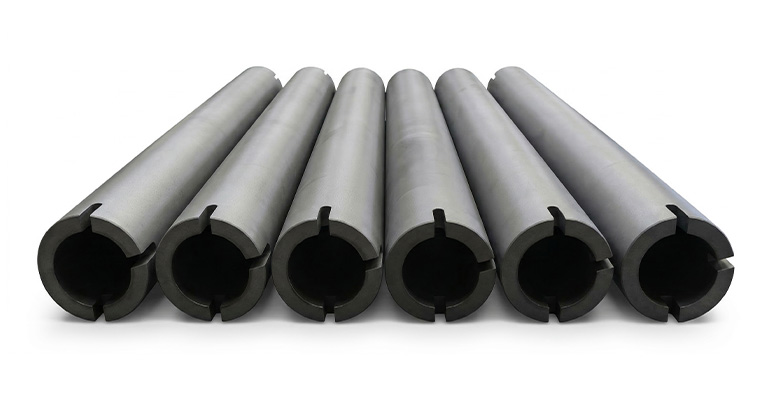
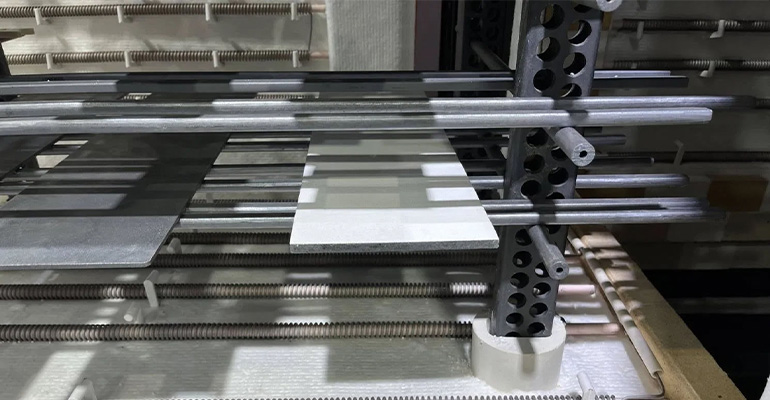
Physically, a silicon carbide roller looks like a long, precision-ground tube, typically with metal end shafts or custom mounting interfaces for installation. Diameters commonly range from 20mm to 200mm, and lengths can reach several meters—up to 3700mm or more—depending on the furnace design. The surface is machined smooth to prevent marking or scratching the products being conveyed.
In a professional setting, these rollers appear as long, precision-ground tubes. Depending on your furnace requirements, they are typically manufactured using two primary methods:
- Reaction Bonded Silicon Carbide (RBSiC/SiSiC): This is the most common type for industrial kilns. It is created by infiltrating silicon carbide preforms with molten silicon. The result is a dense, zero-porosity roller that can be produced in large dimensions (up to 4,000mm in length) at a cost-effective price point.
- Sintered Silicon Carbide (SSiC): Produced at temperatures above 2000°C without the use of metallic silicon, SSiC is the “premium” version. It offers even higher purity and temperature resistance (up to 1600°C+), making it ideal for the most corrosive or ultra-high-heat environments, such as chemical processing or advanced semiconductor sintering.
You might also hear these rollers referred to as SiC kiln rollers, ceramic furnace rollers, or simply high-temperature conveyor rollers. Whatever the name, their job is the same: to keep production moving smoothly through the heat, day after day, without failure.
How Does a Silicon Carbide (SiC) Roller Work?
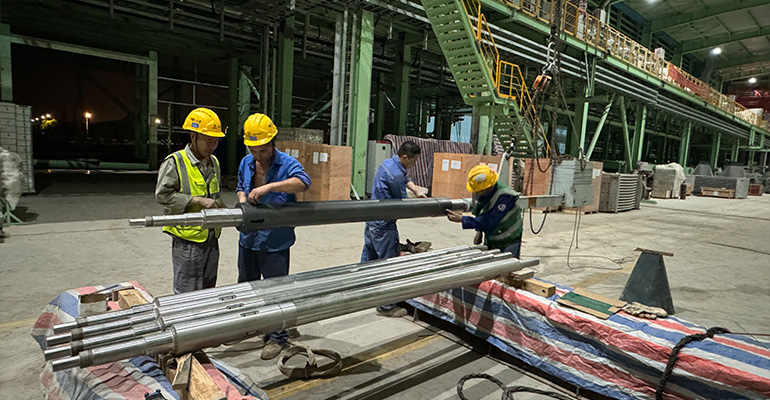
A silicon carbide roller works by doing something straightforward but demanding: it rotates steadily inside a high-temperature furnace, supporting and moving materials like steel strip, glass panels, or ceramic parts through a continuous production process. Dozens or even hundreds of these rollers are lined up side by side, forming a motor-driven conveyor that transports products through heating, soaking, and cooling zones without interruption.
What happens when the temperature climbs to 1000°C or higher is where silicon carbide separates itself from other materials. While steel rollers will soften and deform under load, and graphite rollers gradually oxidize and wear away, silicon carbide maintains its structural integrity—retaining about 80% of its room-temperature strength even at 1100°C. It resists oxidation, so it doesn’t scale or flake, and its low thermal expansion coefficient means it won’t expand unevenly or warp when the furnace heats up or cools down.
The surface quality of the roller also matters. A silicon carbide roller is precision-ground to a smooth finish, which reduces friction and prevents scratches, marks, or sticking on the product being conveyed. In silicon steel annealing, for example, this smooth surface helps resist nodulation—those built-up deposits that can ruin strip quality and force production stops.
Beyond just mechanical support, silicon carbide’s high thermal conductivity plays an active role in the process. It helps transfer heat more uniformly from the furnace to the product, reducing temperature variations across the width and improving overall quality. And because it handles thermal shock well, it survives the rapid temperature changes that would crack less robust ceramics like alumina.
Finally, in aggressive environments—ammonia atmospheres in silicon steel lines, or alkali vapors in glass furnaces—silicon carbide stays chemically inert. It doesn’t react with or contaminate the products, and it doesn’t corrode over time. The result is a roller that simply keeps working, reliably and consistently, through months or even years of continuous high-temperature operation.
Key Advantages of Silicon Carbide Rollers
Investing in Silicon Carbide (SiC) rollers is not just about upgrading a component; it is about fundamentally improving the efficiency and reliability of your thermal processing line. While the initial cost may be higher than metal or standard alumina alternatives, the long-term operational savings are significant.
| Exceptional high-temperature resistance | Silicon carbide maintains its strength at 1300–1600°C—far beyond the limits of metal or alumina rollers. | Your production line runs at higher temperatures without roller failure or deformation. |
| Superior thermal shock resistance | The material withstands rapid heating and cooling cycles without cracking. | No unexpected failures during startups, shutdowns, or process upsets. Less unplanned downtime. |
| Low thermal expansion | Dimensions stay stable as temperatures change, maintaining precise alignment. | Products travel smoothly without shifting or marking, improving quality and reducing waste. |
| High hardness and wear resistance | Silicon carbide is one of the hardest engineering materials available. | Rollers last years instead of months. Fewer replacements mean lower inventory and maintenance costs. |
| Chemical inertness | Resists attack from acids, alkalis, and ammonia atmospheres. | No contamination of sensitive products like silicon steel or battery materials. No corrosion-related failures. |
| High thermal conductivity | Heat transfers efficiently through the roller, promoting uniform temperature distribution. | Better product quality and potentially lower energy consumption in the furnace. |
When you add these advantages together, the result is straightforward: silicon carbide rollers help production lines run more reliably, with higher product quality and lower operating costs. For operations where every hour of uptime counts, that’s a difference you can measure.
Silicon Carbide Roller vs. Other Materials
Different roller materials exist for a reason—each offers something, but they also come with trade-offs. Here’s how silicon carbide compares to the common alternatives:
| Material | Advantages | Disadvantages |
| Steel | Low initial cost, familiar material, easy to machine | Deforms and softens above 500–600°C; oxidizes and scales in high-temperature air; heavy |
| Graphite | Lightweight, good thermal shock resistance, low friction | Oxidizes rapidly in air above 400–500°C; wears relatively quickly; can contaminate products |
| Alumina | Hard, good wear resistance, lower cost than SiC | Brittle; poor thermal shock resistance (cracks with rapid temperature changes); lower thermal conductivity |
| Silicon Carbide | Excellent high-temperature strength; resists oxidation and corrosion; outstanding wear resistance; handles thermal shock; long service life | Higher initial investment compared to traditional materials |
The trade-off is simple: conventional materials cost less upfront but require frequent replacement and risk product quality issues. Silicon carbide costs more initially—but lasts years longer, reduces downtime, and delivers consistent performance. For continuous high-temperature operations, that investment pays for itself.
Where Are Silicon Carbide Rollers Used?
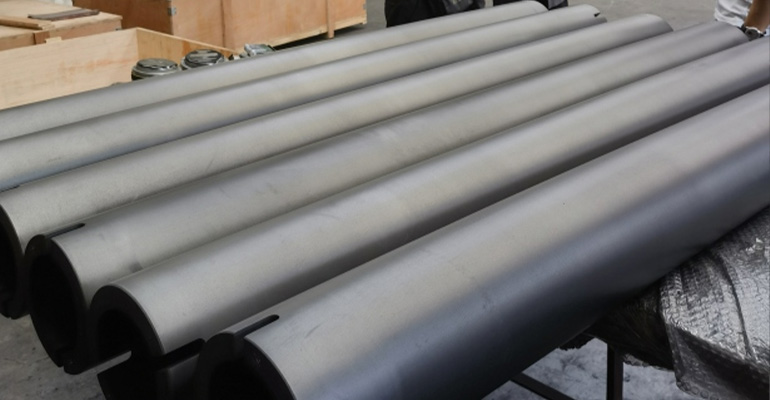
If you run a high-temperature manufacturing operation, you already know that the components inside your furnace or kiln can make or break your production economics. The rollers that support and transport your products through the heat have to do more than just hold up—they need to maintain precise dimensions, resist chemical attack, survive thermal cycling, and never contaminate the very products they’re carrying. That’s a tall order, and it’s exactly why silicon carbide rollers have become the standard across so many industries.
Different industries have different priorities, but silicon carbide delivers advantages that matter across the board:
Steel Manufacturing: Resisting Ammonia and Preventing Defects
In continuous annealing lines for silicon steel and stainless steel, rollers operate in ammonia-rich atmospheres at temperatures exceeding 1000°C. Under these conditions, conventional rollers develop surface deposits called nodules that mark and scratch the steel strip, ruining product quality. Silicon carbide’s chemical inertness means it won’t react with ammonia, and its smooth, hard surface resists nodule formation. The result is longer roller life, fewer production stoppages, and higher surface quality.
Glass Production: Maintaining Flatness at High Temperatures
Float glass, LCD substrates, and photovoltaic panels all require perfectly flat surfaces—any roller distortion shows up as optical defects or breakage. Silicon carbide’s low thermal expansion coefficient means it won’t warp or sag, even across wide spans at temperatures above 600°C. Its high thermal conductivity also helps maintain uniform temperature across the glass width, reducing thermal stress and improving yield.
Ceramics Manufacturing: Surviving Thermal Cycles
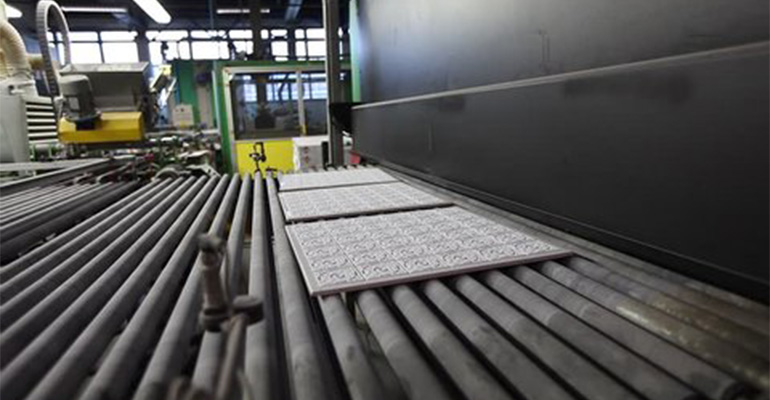
Roller kilns firing tiles, sanitaryware, and technical ceramics cycle through temperature changes regularly—during startups, shutdowns, and product changes. Alumina rollers often crack under this thermal shock. Silicon carbide handles rapid heating and cooling without failure, thanks to its combination of low expansion and high thermal conductivity. Its wear resistance also means fewer roller changes and less downtime.
Lithium Battery Materials: Purity and Stability
The cathode and anode powders used in lithium batteries are highly sensitive to contamination. Silicon carbide rollers don’t oxidize or shed particles at high temperatures, so they won’t introduce impurities during sintering. They also maintain precise dimensional stability, ensuring consistent material thickness and quality across the production run.
Advanced Materials Processing: Reliability Under Extreme Conditions
From magnetic materials to aerospace composites, advanced material processing often pushes the limits of what conventional rollers can handle. Silicon carbide’s combination of high-temperature strength, chemical resistance, and dimensional stability makes it the only practical choice for many of these demanding applications.
How to Choose the Right Roller?
Selecting the ideal Silicon Carbide roller is not a “one-size-fits-all” process. To ensure maximum service life and production efficiency, you must match the roller specifications to your specific furnace environment. Here are the four critical factors our engineering team recommends considering:
- Operating Temperature Range: While SiC rollers are famous for high-heat stability, the specific grade matters. For standard applications up to 1350°C, RBSiC (Reaction Bonded) is typically the most cost-effective choice. However, if your process exceeds 1500°C or involves extreme thermal cycling, SSiC (Sintered) or ReSiC (Recrystallized) rollers may be required to prevent structural failure.
- Furnace Atmosphere: Consider the gases inside your kiln. If you are working with high concentrations of alkali vapors or acidic gases, ensure the roller has the appropriate chemical density to resist surface pitting or “scaling” over time.
- Load Capacity & Mechanical Stress: Calculate the total weight of the products passing over each roller. This determines the required diameter and wall thickness. A roller that is too thin will vibrate or fail under heavy loads, while one that is too thick may add unnecessary energy costs to your drive motors.
- Dimensions & Installation:Dimensions and installation details matter. Diameter, length, and end fitting configurations need to match your furnace design precisely. Many manufacturers, including us, offer custom sizing based on your drawings. Surface finish requirements—whether standard machined or polished to a specific roughness—also affect product contact and release properties.
Choosing the right roller depends on your unique operational goals. If you are unsure which specification fits your line, providing us with your furnace type and load requirements is the best way to get a customized, reliable recommendation.
Maintenance & Best Practices
Silicon carbide rollers are designed to last, but how you handle them during installation, operation, and maintenance makes a real difference in service life. A few practical practices help prevent premature failure and keep your line running reliably.
- Installation matters. When mounting rollers, avoid mechanical stress from misaligned supports or uneven clamping. The material is hard but not forgiving—excessive force or poor alignment can cause cracks that aren’t visible initially but grow over time. Make sure end fittings seat properly and supports are level before startup.
- Control cooling rates during shutdowns. Silicon carbide handles thermal shock better than most materials, but no ceramic likes extreme temperature swings. When stopping production, follow recommended cooling curves rather than quenching the furnace. Gradual cooling reduces internal stresses and extends roller life.
- Check rotation synchronization regularly. In continuous lines, dozens or hundreds of rollers work together. If one roller slows down or stops, it creates drag that wears both the roller and your product. Periodic inspection of drive systems and roller rotation helps catch issues before they cause damage.
- Monitor surface condition. A smooth, clean surface is essential for product quality. If you notice buildup, marking, or changes in surface appearance, investigate early. Sometimes adjusting furnace atmosphere or cleaning procedures resolves the issue before it requires roller replacement.
- Keep spare rollers on hand. Even with best practices, eventual replacement is normal. Having matched spare rollers ready minimizes downtime when changeout becomes necessary.
Proper handling doesn’t require complex procedures—just attention to the basics that keep high-performance materials performing as intended.
